October 2026 · Notes from Sandra
Your first Gulf Coast winter: freezes, faucets, and the market's calmest months
SM By Sandra McDuffie
Realtor®, eXp Realty · TX Licensed
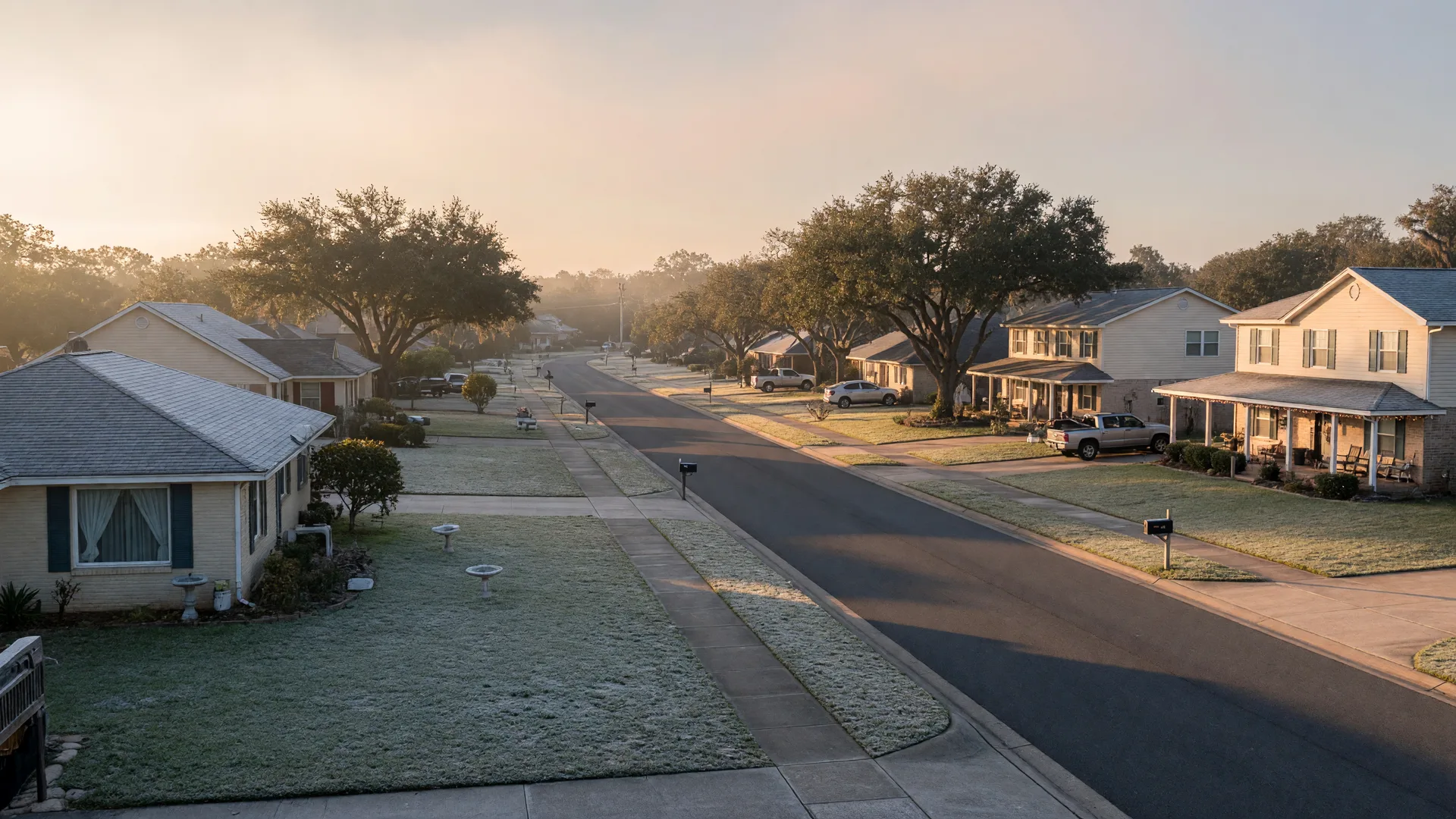
Winter on the Gulf Coast is less a season and more a handful of nights, and knowing which nights matter is half the calm. Houston's average first freeze lands in early-to-mid December, Galveston holds off a week or two longer, and the window that actually deserves your attention runs from December into mid-February. This is the primer I hand relocating families in the fall: what a freeze watch means, the one-afternoon pipe routine that saves real money, and why the coolest months of the year are also the quietest ones on the market. Ni frío, ni miedo: a little preparation, and winter here becomes another cozy chapter.
Freeze season follows a calendar, not a mood
Houston's average first freeze arrives in early-to-mid December, and the coastal counties are gentler: Galveston typically waits until mid-to-late December, and frost close to the bay is genuinely rare. The window that matters for exposed pipes and tender plants runs from early December into mid-February, and hard freezes have shown up as early as late November and as late as March. In other words, this is a freeze season with dates, not a winter that owns the calendar the way northern winters do.
Most years deliver only a handful of freezing nights, usually in a row, and the region treats them as routine: a watch on the weather, an afternoon of prep, and a few cozy days. The families who relax fastest here are the ones who learn the pattern once and then stop worrying about it.
What a freeze watch actually means
When the National Weather Service issues a freeze watch or freeze warning for the Houston-Galveston area, it simply means temperatures at or below 32 degrees are expected. Bridges and overpasses ice before streets do, which is why crews pre-treat them on the coldest nights, and why the local habit is to slow down, not to stay inside for a week. A winter storm watch or warning is the bigger brother, issued when accumulating ice or snow is possible, a rarer event here that deserves the full checklist.
The useful mindset shift for newcomers: a freeze night is an evening, not an emergency. The National Weather Service at weather.gov and Texas 2-1-1 keep you informed without turning up the thermostat of your mood. Preparados, con calma: that is the local way.
The one-afternoon pipe routine
Most freeze damage in this region is water damage from burst pipes, not ice on the roads. The danger threshold local plumbers talk about is roughly 28 degrees sustained for four hours, which is why an afternoon of prep beats a week of remediation. The routine: disconnect and drain garden hoses, cover outdoor hose bibs, wrap pipes in attics and exterior walls with foam or fiberglass insulation, open the cabinet doors under sinks to let warm air reach the plumbing, and let a faucet drip slowly on the coldest nights. Shut off and drain sprinkler systems so an irrigation line cannot be the leak you discover in January.
If you are traveling during a freeze, shut off the water at the main valve, open the lowest faucet to drain the lines, and leave the heat on. Ten quiet minutes before you leave, and your house takes care of itself. Write the routine down once, tape it to the pantry door, and winter becomes a non-event.
The winter-viewing trick no one hands you
Here is a silver lining buyers rarely expect: December and January are the best months to see a home's cold-weather character. A drafty window, a thin attic door, a water heater living in an uninsulated garage, all of it shows up in winter in ways a June tour cannot reveal. When I show homes in the quiet season, I point at the details I want my buyers to notice, because the asking price will not tell you which rooms stay cozy and which one needs a sweater.
The same quiet season often favors the negotiators. Sellers who list in December tend to be motivated, and with fewer buyers touring, you get more time to think and fewer bidding contests. If you browse the listings at https://sandramcduffie.exprealty.com/ and see a home you like in the middle of January, that is often the most honest deal you will find all year.
The market takes its calmest breath
For buyers, winter is the season of the advantage. The slowest months of the Houston-area market are typically December and January, with fewer new listings, fewer competing offers, and sellers who sometimes price for a quiet close. That does not mean nothing sells: it means the buyers who do show up are the ones who get thoughtful answers, extra showings, and a negotiating table with room on it.
For sellers, the lesson is timing with eyes open. Many owners wait for the spring rush, and that is a fine strategy, but a well-priced winter listing faces far less competition for attention. Whether you are buying or selling, my job is the same: read the season honestly and let it work for you, not against you. Warm by nature, sharp by practice, and that applies to January as much as June.
The coast stays gentle
One of the quiet pleasures of living near the bay is how soft winter feels. Galveston and the Bay Area communities like Kemah, Seabrook, and League City run milder than the inland suburbs: their first freeze comes later, frost is rarer, and a January afternoon can still deliver a sunny walk along the water. The freeze story is mostly a Houston-suburbs story, which is why the county map matters when you choose where to land.
Even so, the coast can surprise you: a balmy 74-degree day can be followed by a freeze night, because Gulf weather changes in hours, not days. Keep the porch plants movable, keep the routine taped to the pantry door, and let the season be what it is here: short, occasional, and a good excuse for a pot of chili.
The checklist
- 01 Houston's average first freeze is early-to-mid December; Galveston and the Bay Area wait a week or two longer
- 02 The window that matters runs December to mid-February, with hard freezes possible late November and as late as March
- 03 Freeze watches and warnings mean 32 degrees is coming; bridges and overpasses ice before streets do
- 04 The pipe alarm threshold is about 28 degrees sustained for four hours: one afternoon of prep prevents the January surprise
- 05 The routine: disconnect hoses, cover hose bibs, wrap attic and exterior pipes, open under-sink cabinets, drip a faucet, drain the sprinklers
- 06 Leaving town in a freeze? Shut off the main water valve, drain the lines, and leave the heat on
- 07 December and January are the market's calmest months: fewer offers, more negotiable sellers, and the honestest view of a home's cold-weather character
Winter on the Gulf Coast is one of the gentlest winters you will ever live once you know the three moves: watch the calendar, protect the pipes, and let the quiet market do you a favor. Browse the live listings at https://sandramcduffie.exprealty.com/ whenever you feel the pull, and call or text me at (346) 222-4996 when you want a tour with honest eyes. En inglés o en español, estoy aquí: every step of the way, and every season of the year.